
Build Strong Defense Against Cyber Threats!
Network security protects your institution's digital assets against cyber attacks, data breaches, and malicious software. As Dem Teknoloji, we secure your network infrastructure with comprehensive security solutions, detect security vulnerabilities, and intervene instantly in threats with 24/7 monitoring service. We meet all your security needs from firewall management to penetration tests, from IDS/IPS systems to VPN installation, and ensure KVKK and ISO 27001 compliance.
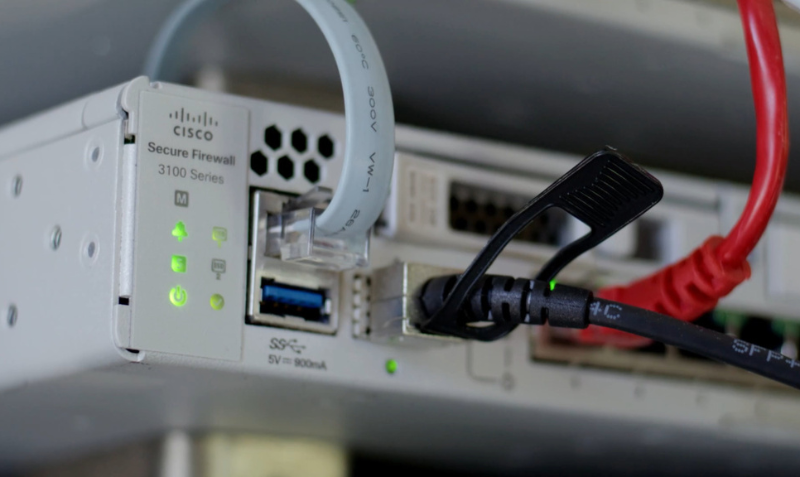
Firewall and Security Wall Management
We protect your network against external threats, filter traffic and perform access controls.
- Firewall installation and management.
- Security policy design and rule optimization.
- Application control and deep packet inspection.
- SSL/TLS traffic inspection.
- Fortigate, Palo Alto, Cisco, Checkpoint integration.
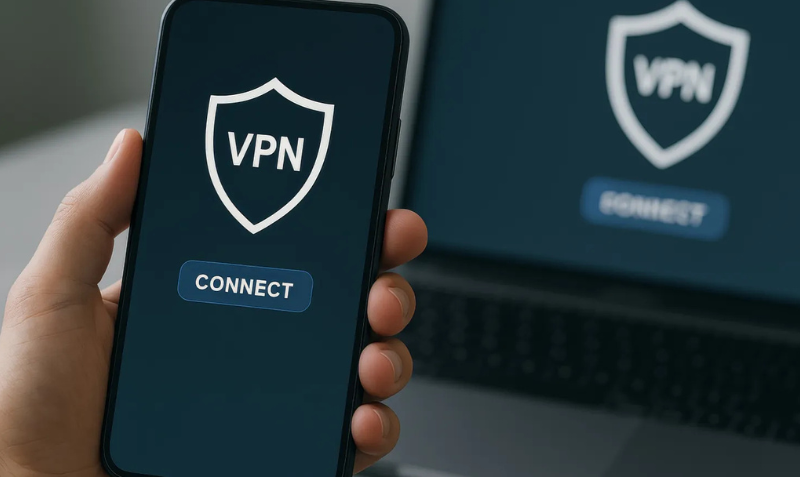
VPN and Secure Remote Access
We provide encrypted, secure connections for remote workers and branches.
- Site-to-site and remote access VPN installation.
- IPSec, SSL VPN and WireGuard solutions.
- Multi-factor authentication (MFA) integration.
- Zero Trust Network Access (ZTNA) application.
- VPN performance optimization and monitoring.
Frequently Asked Questions
Cyber attacks are increasing and becoming more sophisticated every day. Data breaches can cause millions of TL losses to companies and damage brand reputation. Legal regulations such as KVKK and GDPR make data security mandatory. Ransomware attacks threaten your business continuity. Strong network security protects customer data, prevents operational interruptions, and allows you to avoid legal sanctions. Proactive security measures are much more cost-effective than reactive solutions.
A firewall creates a security barrier between the internal network and the outside world (internet). It filters incoming and outgoing traffic according to predefined security rules. It blocks malicious connections and prevents unauthorized access. Next-Generation Firewall (NGFW) recognizes and controls applications. It automatically blocks known attacks with IPS (Intrusion Prevention) feature. It also scans encrypted traffic with SSL inspection. We use industry-leading solutions such as Fortigate, Palo Alto, Cisco.
Penetration testing (pentest) is testing the security vulnerabilities of your systems like ethical hackers. Web applications, network infrastructure, wireless networks are tested. Vulnerabilities are detected and a detailed report is presented. It should be done at least 1-2 times a year, after major system changes, and for compliance requirements. Black-box, white-box and gray-box testing methods are used. Tests are performed according to OWASP Top 10 and CVE databases. Results are prioritized and improvement suggestions are presented.
IDS (Intrusion Detection System) detects threats and gives an alarm, but does not block. IPS (Intrusion Prevention System) automatically blocks and stops threats. IDS performs passive monitoring, IPS actively intervenes. IPS is generally preferred in modern systems because it provides real-time protection. Signature-based and anomaly-based detection methods are used. Fine-tuning is done to minimize the false positive rate.
VPN (Virtual Private Network) provides encrypted connection over the internet and is secure. It is used for remote workers to securely access the office network. It provides secure communication between branches (site-to-site VPN). It protects your data while using public Wi-Fi. It uses strong encryption protocols such as IPSec, SSL/TLS. Security is increased with multi-factor authentication (MFA). With split tunneling, only work traffic passes through VPN. We offer modern VPN alternatives with Zero Trust Network Access (ZTNA).
DDoS (Distributed Denial of Service) attacks aim to crash your system with excessive traffic. We provide protection with Anti-DDoS services (Cloudflare, Akamai). Traffic filtering and rate limiting are applied. Load is distributed using CDN (Content Delivery Network). DDoS protection modules are activated in Firewall and IPS. Bandwidth capacity is increased. Abnormal traffic is detected with monitoring systems. Quick intervention is provided with incident response plan.
Zero Trust is based on the principle of "never trust, always verify". It does not distinguish between internal and external networks, every access request is verified. User and device authentication is performed. Network is divided with micro-segmentation. The principle of least privilege is applied. Continuous monitoring and risk assessment are performed. It is the ideal security approach in modern business environments (cloud, remote work). It is much more effective than traditional perimeter security.
SIEM (Security Information and Event Management) collects and analyzes all security events centrally. Firewall, server, application logs are monitored in real time. Anomaly detection and threat analysis are performed. Correlated events are combined with correlation rules. Compliance reports (ISO 27001, PCI-DSS) are automatically created. Our SOC (Security Operations Center) teams monitor 24/7. Platforms such as Splunk, QRadar, ArcSight are used. Proactive threat hunting is performed.
WPA3 encryption protocol is used (WEP and WPA2 are not secure). SSID hiding and MAC address filtering are applied. Corporate network and guest network are separated (VLAN segregation). User authentication is done with 802.1X. Rogue AP (fake access point) detection is performed. Strong passwords and regular password changes are applied. Wireless network traffic is monitored and logged. Physical security (secure placement of access points) is ensured.
Perform regular and offline backups. Use email security and anti-phishing solutions. Keep software and operating systems up to date. Restrict user privileges (least privilege). Install endpoint protection (EDR/XDR) solutions. Prevent spread with network segmentation. Give security awareness training to employees. Prepare an incident response plan. Tighten macro and script execution settings. Configure services such as RDP and SMB securely.
ISO 27001: Information security management system standard. PCI-DSS: Credit card data security standard (mandatory for e-commerce). KVKK: Law on Protection of Personal Data (Turkey). GDPR: EU General Data Protection Regulation. SOC 2: Security standards for service organizations. HIPAA: Protection of health data (USA). Each sector has its own compliance requirements. We provide support in audit and documentation processes.
First isolate the affected systems (disconnect from the network). Protect logs, do not hide evidence. Call our 24/7 incident response team. Determine the scope of the attack. Stop malicious activity and limit its impact. Perform forensic analysis, identify the attack vector. Eliminate vulnerabilities and strengthen systems. Inform relevant institutions (KVKK, law enforcement). Perform post-mortem analysis and prevent future attacks. Restore business continuity.

Let Us Call You Now!
Fill out the form below, and we will call you immediately to answer your questions and offer you the most suitable solutions.